Categories
Uncategorized

The Awakening (long blog)

Kate Chopins, “The Awakening” is a feminist focused novel that focuses on the reality of life for many women stuck in a marriage during the 1800s. It exposes the lives that many of these women lived- submitting to their husbands and abandoning a sense of identity and individuality. Edna, the protagonist in this novel, wants to be outside of these social norms and be able to stand on her own, without her husband who she doesn’t even want to be married to. After reading this book, I concluded that I believe it should be considered a great American novel. Its elegant writing style and its open face explanation of reality for women in this time and underlying experiences of women now, all open the eyes of readers to these truths. Stylistically, Chopin wrote with an elegant style, but wasn’t afraid to express the deep feelings that Edna had as a character. Some of these feelings were dark, like the fact that she hated her children and blamed them for putting them in a mother role, and ultimately abandoning them when she swims out to sea and never returns. While this ending may not have been what readers wanted to hear, the writing style worked for this novel because it shows what these societal norms pushed some people to. Another reason why this novel should be considered a great american novel I believe is because of Ednas character development throughout the novel and how Chopin makes it very clear what Ednas mindset is, which allows us to have a deeper connection with her.

One major theme throughout this novel is the consequences of self expression during this time, especially when women tried to express themselves in ways that society had told them was unacceptable. Edna stumbled into a marriage that she didn’t want to be in and over the course of the novel, she began to defy orders from her husband. He would offer her wine or tell her to come inside and go to bed but she refused and this gave her a sense of power and control. She didn’t want to be held back and wanted to be her own individual person, which can apply to aspects of life today. I believe that yes, everyone is their own individual but when you are in a marriage, you both have to work together and compromise on some things. When it comes to Ednas resentment of her kids, this is another aspect that the author got wrong about applications to today. Edna didn’t want to be a mother, but she had kids and she abandoned them when they needed her. Edna was a selfish character, by entering into relationships with other men outside of her marriage and by blaming her kids for her lifes predicament and ultimately killing herself. She was only thinking of herself in these situations and didn’t care about how her decisions would effect others, especially her children. As Ednas character development becomes more prominent as the novel continues, the people surrounding her start to judge her for actions and don’t understand her or her ways. Every aspect of Ednas life taught her something about herself. Her ability to swim taught her that she has the strength and can stand on her own. Her paintings taught her that there is truth in individuality. As she became more outspoken about there newfound interests and passions, she was met with more backlash ,especially from her husband. This continual back and forth causes a bigger rift to come between them, driving Edna more away from him and into the hands of other men, mostly Robert. Ultimately, when Robert leaves her and says “i’m doing this because I love you”, this is the final straw for Edna, and she ultimately commits suicide.
Categories
Uncategorized

The Good Earth and Life Lesson

Within “The Good Earth,” there are many apparent themes that give us insight into lessons we should take away about life. One of these themes is mans relationship to the earth. Humans were created to inhabit the earth, to build it up and make it their own but over the centuries, we have neglected our purpose for our own selfish desires. Today, our world faces adversity after adversity such as climate change, air pollution, our oceans becoming trash lands, and much more. We look to the land to provide us with the necessary resources and supplies but we lack the contribution of giving back to the earth. Our relationship to the earth is two-sided- it provides us with nourishment and we must take care of it to the best of our abilities. But today, we struggle more than ever with this. Trash fills our oceans, killing all the sea life, toxic chemicals fill our air which is decreasing bird populations, and unknowingly kills millions of people every year.

In “The Good Earth”, Wang Lungs connection to the land is connected to his identity and his worth ethic. He harvests and cares of it himself, with no help from laborers. By him taking care of his own land with his own hands, this causes a stronger bond between him and the ground. In contrast to Wang Lung, the Hwang family, a local wealthy family that is held high on a pedestal, has laborers who take care of their land, they have absolutely no connection. Wang Lung, although a poor farmer, in the beginning, he created his wealth by means of his land that he looked over and harvested. During the famine when Wang Lung and his family had no food to eat, they literally ate the dirt off this ground, just another symbol of what it provides. As Wang Lung grows older and starts to enter into more of the city life, he misses his land and returns often to visit it but the connection between him and his land is not the same and continues to grow weaker and weaker. Continually, his uncle asked to buy his land, even when Wang Lungs family was on the brink of starvation, he refused to give it up to anyone. At one point, he even considered selling his own daughter in order to have money to pay for the land. His undying love for his land caused him to do crazy things sometimes. Wang Lung’s identity is tied into this land, and he believes that it is a piece of wealth that nobody can take away from him no matter how hard they try. As political events began to take a turn and people began to riot against the wealthy, Wang Lung paid no attention to this and never felt that desperation to riot against the wealthy because his land was his wealth. Once Wang Lung hires his own workers to take care of the field and he starts to hang out at the Tea house, eventually falling head over heels in love with Lotus the prostitute, his connection to the land begins to wither.

The final act of Wang Lungs sons looking at him and telling him they won’t sell the land but eventually do undermines everything that Wang Lung worked for. This land gave him his wealth over time, and it was tied in with his identity. The title of this book says it all- this earth that we live on is in fact so good. It provides us with life and without it we wouldn’t be able to live and evolve.

Categories
Uncategorized

Binding of Feet in Chinese Culture

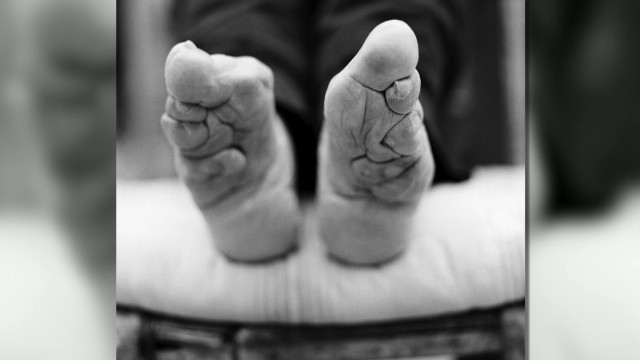
Binding of women’s feet was a very desirable characteristic in Chinese culture for many centuries. This fashion trend began centuries ago during the Song Dynasty (960-1279). It started out among the upper class families and became widespread among all Chinese families. This practice was common among women and was excruciatingly painful for them. The practice was started when a girl was young and they would bind her feet, basically breaking all the bones in their feet and forcing them to heal in a way that looked like horse hooves. Food binding followed a very specific ritualistic ceremony where they would push the toes under the soles of their feet and wrap their feet all the way up to their ankles in very tight wraps. As years passed, if their feet continued to grow, they would start this whole process over again- breaking the bones in their feet until they would grow into the shape of a hoove. Many women did it for the sole purpose of following the fashion trend of the time- men found women who had bound feet suitable for marriage and “wife material”. Once this fashion trend went completely out of style in 1979, many women found their husbands leaving them for women who had unbounded feet.

In “The Good Earth” O-lan never bound her feet, something that Wang Lung was not satisfied with. When Wang Lung saw Lotus and noticed that her feet where bound, he instantly fell in love for her and eventually had an affair with her.

Schiavenza, Matt. “The Peculiar History of Foot Binding in China.” The Atlantic, Atlantic Media Company, 17 Sept. 2013, http://www.theatlantic.com/china/archive/2013/09/the-peculiar-history-of-foot-binding-in-china/279718/.

Categories
Uncategorized

Money to the Brain

Pearl S. Bucks, “The Good Earth”, has one central theme throughout the novel trying to show, specifically through Wang Lung, how as a person acquires more money, they begin to become more selfish, loosing their identity in consumerism and the material of money itself. Wang Lung has lived off the land that has been passed to him and not much else for the majority of his life. Even in the beginnings of his marriage to O-lan and throughout the birth of their children, their economic state continued to decrease, leaving them on the bring of starvation. At one point, Wang Lung even debated selling his daughters in order to be able to keep his land, saying, “I might have done it, if she had not lain in my bosom and smiled like that.”Once the rebellion occurs and everyone breaks into and steals from the wealthy class, Wang Lung has more money than he could ever asked for. By feeding his Uncles Opium addiction, he continued to acquire more and more money. With this newfound experience of being wealthy, Wang Lung is able to hire laborers to work on the land he fought so hard to keep. He also begins to focus his eyes on other women rather than O-lan, believing he can do whatever he wants because he is now considered to be “rich” in societal views.As their children continue to grow up, they take after their father in this sense- greedy and self serving. They loose all respect for the land, their religion, and their historical and societal culture.

Categories
Uncategorized

The Modernization of China

My choice novel, “The Good Earth”, takes place during the modernization of China during the 1930s. The time before this though, was a very ruthless economic and social environment to grow up in. The 19th century was very trying times for China, with its political institution in shambles and no new use of modernized technologies or any form of economic growth, the Chinese people continually suffered. Peasants and other workers were stripped off their livelihood and crops by the landowners leaving nothing for them to sustain their life. This is prominently seen in my book when Wang Lung and his family are on the brink of loosing their land, starving and struggling to find sufficient food to feed their family.

The social culture of China began to turn when the communist revolution took place which focused on “class conflict, state ownership and management of the economy, and substantial dose of ideological orthodoxy.” This revolution did not happen without its fair share of difficulties though, there were several decades of disagreements and fights between supporters and offenders. Communism in China was the reformation of the country as a whole. Over the next few decades, there were still more arguments about how China should be led and run. With westerns trying to get involved in the Opium sales, it forced China to open its doors more to outsiders.

Throughout this book, you can see the social cultural struggles that this family has to face on a daily basis. The poor begin to steal from the wealthy once the economy starts to decline and the lower class is hit far more worse than the upper class yet, the struggles that China experienced impacted everyone greatly.

Little, Dan. “Chinese Modernization c. 1930.” Chinese Modernization c. 1930, 1 Jan. 1970, understandingsociety.blogspot.com/2017/07/chinese-modernization-c-1930.html.

Categories
Uncategorized

Pa and Wang Lung

Throughout my experience reading my choice novel,”The Good Earth”, I was able to make many connections between him and Pa from Grapes of Wrath. Wang Lung, while his father is still living with him, is supposedly the man of the house, but he does not step into this role completely in any part of the novel. Wang Lung submits to his fathers control and even at times his wifes, who according to the times, should have absolutely no power at all. Wang Lung is shy, especially when it comes to people controlling aspects of his life when he should really be in control. He is a man but doesn’t really take on any of the societal views of what the man should be in the house until way later in the book. A few glimpses of him fighting for his land and providing for his family are seen, but these traits only show up when they need it the most. Pa, also the man of the family, also falls away from this man of the house role, leaving ma and Tom to take over what he left behind. Pa felt like a failure because he couldn’t keep the families land, another concept prevalent in both these novels. One difference between these two characters when it comes to father of the house is Wang Lung eventually steps up when necessary unlike Pa who completely drifts back into the shadows, not taking control of the situation because he is so lost in his own grief and sadness to focus on anyone else.

Categories
Uncategorized

The Legacy in Owning Land

In many cultures, land has been passed down from generation to generation, always staying within the bound of the family. Many families take pride in acres they own because it symbolizes their economic status. Many people also believe that owning land means you can provide and care for yourself, on a deeper level, it shows insight to your character and personality. The topic of owning and caring for land is one of the prominent themes in Pearl S. Bucks, “The Good Earth”. This topic can be connected to the idea of land owning in “Grapes of Wrath”. In grapes of wrath, Pa based his whole identity off of his land. But once he was stripped of it, he felt lost and like a failure. He spent his entire life caring and tending to this land just for it to be taken away when the economy was falling apart. This is a similar experience that Wang Lung is going through. The land that he has taken care of his whole life, land that has been passed down from generation to generation, is slowly starting to be taken from him and its reeking havoc on his ability to function. He is suppose to be the provider of the house, the man that takes care of everyone but he can barely fulfill that role. The concept that land defines a family is seem clearly in both these novels. The rise and fall of controlling and prospering off land is defined throughout both these novels. But to what extent does land truly define a person? Does someone having more land than others make them a better person?

Categories
Uncategorized

“I shall never sell the land”

Wang Lung as a character, has many complexities. On one hand, he really powerless, grasped under his fathers rules and regulations on every aspect of his life. The one other relationship it seems that he should have power in, is his relationship with his wife who he bought from a prestigious family in China, but even then, it seems that his wife has the undermining control. Wang Lung wants to see himself as someone to be feared and respected, when in reality, he is a pushover in many aspects of his life. Except for one. When Wang Lungs uncle and 2 other bank men come to try and buy his land, Wang Lung refuses, denying their continued offers to take it off his hands. In order to keep his land, Wang Lung had to sell everything else he knows. Every piece of furniture in his house, the crops they grew out of their own harvest, and all his farming tools. But he refused to sell his land. This points to a bigger idea of the theme of legacy and family history. This land was once his fathers, whos fathers father owned it and it goes back for centuries in this family.Wang Lung, being the current caretaker, wanted to pass it on to his boys someday as well. Wang Lungs dedication goes so far, he even says “Big by bit I will dig up the fields and feed the earth itself to the children and when they die I will bury them in the land, and I and my wife and my old father, even he, we will die on the land that has given us birth!”. This shows that Wang Lungs dedication to his land goes far beyond his own needs, but that his family legacy will forever be with this land.

Categories
Uncategorized

Pining for Faye

In Nathanael West’s “Day of the Locust”, it seems that almost every male character’s ultimate goal is to end up with Faye. Fights broke out over her, and hearts are broken because of her. Tod, the character who most seems to want her, has an obsession so great that he might even want to hurt her in some way. Faye doesn’t have much to offer to these men, almost as boring of a character as Homer but because she is beautiful, it makes up for her lack of other skills in the eyes of these characters. Being a naturally flirty and outgoing person, men misunderstand her intentions, believing that she wants them when in reality, she has no intention of ending up with them. Tod struggles with this especially when his feelings for her start to become violent, especially when he feels that he could even rape her. Tod sees her as self-absorbed and focused solely on her own goals, a common conception of people living in Hollywood, a place where people go to obtain their own selfish dreams, without a care for other peoples goals. Homer, who also is pining for Faye, is the most boring and uneventful character in this book. By the end of the book, I was very caught off guard by the violent outbreak that took place during the cockfight. Faye, a symbol of the misunderstood norms of Hollywood, is also misunderstood herself. Men want her, but not for her, only for what she can give them.

Categories
Uncategorized

The Good Earth and Women in 1939

Pearl S. Bucks, “The Good Earth” follows the story of a poor farmer named Wang Lung during turn-of-the-century times in China. The book opens on the day of Wang Lung’s wedding day- the day he is to be married to a 20-year-old slave from a higher class family. Right from the beginning, women are seen as strictly objects to clean, take care of the men in the house, and to bear them children. Wang Lung describes how he wished to marry a “pretty slave” and his father instantly responded with “and what will we do with a pretty woman? We must have a woman who will tend the house and bear children as she works in the fields, and will a pretty woman do these things? She will be forever thinking about clothes to go with her face!….” This quote alone provides deeper insight into how women were seen during the 1930s in China. Comparing this to slavery in America, African Americans were sold all over the South with no hesitation. They weren’t seen as human, not even less than, they were property and only property. Wang Lung married this slave-girl without even speaking a single word to her- he had to buy his wife from. another family. There was no love, no affection, strictly business. Although China is becoming evolved on a manufacturing basis during this time, their social-cultural views of women, are still lacking on a much broader level. Even though today in America, these views of women have changed, there are still many stereotypes against them and on some level, will the belief that they are less than men ever truly go away?

Design a site like this with WordPress.com
Get started