While no one really likes seeing a character in a movie or book die, I believe that many great books have some form of tragedy in them, including All the King’s Men. While Willie Stark’s death was tragic and unfortunate, it was drama and a climax everyone reading the novel needed. It was sad to see when I read about Willie’s death, since he truly had a rags to riches story. An “American dream” if you will. You don’t usually hear about those types of stories in the real world, which is why I was so happy for him when I learned that he came from a poor upbringing. However, Willie did not handle some situations in the book well, and didn’t always treat his staff––such as Jack, the narrator––with respect and kindness. The cause for his death was also the fact that he cheated on his wife, and some people could no longer trust him. While his death is conflicting since he wasn’t a great person but his rise to fame is a story that everyone loves, it was unfortunate that he was murdered. When I read it, I wasn’t very surprised and somewhat saw it coming, but it was still sad that one of the main character’s story had to end like that. Due to Willie’s death, Jack gets out of the world of politics and we soon find out that he never ends up going back. I honestly don’t blame him for doing that. He probably had too much trauma not only working for Willie and finding out everything else about the other candidates, but trauma from his untimely death as well.
Category: Uncategorized
Categories
Relationships in All the King’s Men
Throughout my time reading All the King’s Men, one thing that has surprised me is how similar the relationships were back then compared to today. While this may sounds dumb and like a really small thing, I can’t help but think back to my last blog on this book and think how similar lives were now compared to back then, and I honestly had no idea. Willie Stark, the main character, has a wife named Lucy Stark, but has at least one mistress. I say “at least one” because I wouldn’t be surprised if he had more. While this isn’t super relative to the plot line, I couldn’t help but compare it to politics after the 1930s when this took place, and even today. The first thing that came to mind when I heard about the mistress, the first thing I thought of was president JFK while he was in office. While Willie isn’t president of the United States, it still brought my mind to the whole scandal where he was allegedly cheating on Jackie with Marilyn Monroe. That was such a big deal at the time to the country, because this president they all had grown to love and know was supposedly cheating on his wife and mother of his kids with the biggest celebrity of the time. After I made this connection, I realized that politics at any level, in pretty much every time frame, goes way beyond the issues present at that time. It’s scary to now think about what we don’t know about so many politicians, but they’ll do whatever it takes to cover that up so they can win.
Categories
Binding of Feet in Chinese Culture
Binding of women’s feet was a very desirable characteristic in Chinese culture for many centuries. This fashion trend began centuries ago during the Song Dynasty (960-1279). It started out among the upper class families and became widespread among all Chinese families. This practice was common among women and was excruciatingly painful for them. The practice was started when a girl was young and they would bind her feet, basically breaking all the bones in their feet and forcing them to heal in a way that looked like horse hooves. Food binding followed a very specific ritualistic ceremony where they would push the toes under the soles of their feet and wrap their feet all the way up to their ankles in very tight wraps. As years passed, if their feet continued to grow, they would start this whole process over again- breaking the bones in their feet until they would grow into the shape of a hoove. Many women did it for the sole purpose of following the fashion trend of the time- men found women who had bound feet suitable for marriage and “wife material”. Once this fashion trend went completely out of style in 1979, many women found their husbands leaving them for women who had unbounded feet.
In “The Good Earth” O-lan never bound her feet, something that Wang Lung was not satisfied with. When Wang Lung saw Lotus and noticed that her feet where bound, he instantly fell in love for her and eventually had an affair with her.
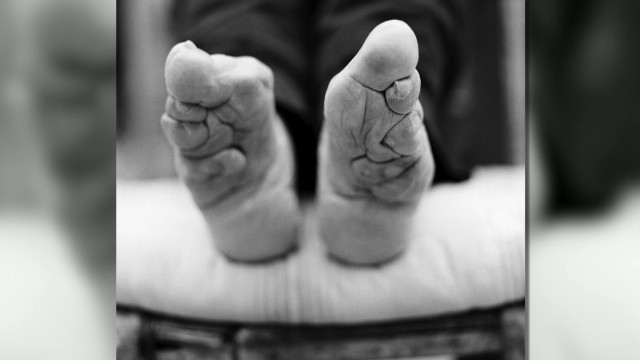
Schiavenza, Matt. “The Peculiar History of Foot Binding in China.” The Atlantic, Atlantic Media Company, 17 Sept. 2013, http://www.theatlantic.com/china/archive/2013/09/the-peculiar-history-of-foot-binding-in-china/279718/.
Categories
Wolf Or Dog
“The ancient song coursed through him and he came into his own again, and he came because men had found a yellow metal in the North.” (Pg.23) is one of the greatest lines in Jack London’s The Call of The Wild. It tells about the most important dog in the book, Buck.
Buck was born on an estate in California until he was put on a train to Canada where the Klondike Gold Rush was in full swing. He was then trained to become a sled dog. This is where he gained his more primal instincts to survive.
The modern dog evolved from wolves 15,000 years ago. The ideal picture of a dog is proud, loyal, and handsome. While the most prominent image of a wolf is a strong beast that hunts in packs and will kill anything it sets its eyes on. Buck combines the image of these two animals. Buck is physically a dog, but possess a wolf like ferocity when it comes to fighting. Yet he still has some doglike traits, he is loyal to only John Thornton after he saved Buck. Yet after John dies, he turns into a wolf. He remains a dog yet he fully transforms into a wolf like mentality.
During Buck’s journey, he faces many trails, some more painful than others. Yet he truly turns into what his circumstances forces him to be. All this is because man wanted the yellow metal in the north.
Categories
Luck is All You Need
Something I’ve found fascinating while reading Cormac McCarthy’s Blood Meridian is how it deals with the concept of luck and how critical being lucky is to surviving in the world he creates. In a world where death is around every corner, every engagement or interaction with any person could result in your permanent end. There’s a scene where the kid enters a bar looking for a drink without any money, threatens the bar tender until he gives him a drink, then fights and kills the bartender. Later in that scene he kills two bystander who stood up for the bartender and declared him in the wrong. That concept, that luck is what one needs to survive, not skill, or diplomacy, is what makes the western setting the book takes place in so uniquely terrifying. There’s another scene where the kid joins a militia that’s continuing the Mexican-American war after the US Government already signed a treaty with the Mexicans. They attempt to attack what looks like a couple of men driving some stolen cattle, and end up getting ambushed by Indians. The kid survives again, purely through luck and not through any abilities or skills of his own, while hundreds of what were his comrades are slaughtered around him. This is terrifying to me, the idea that you can prepare for every eventuality, master every skill, execute every decision correctly, and still get snuffed out by some psychopath who’s lucky and seemingly unkillable.
Categories
Money to the Brain
Pearl S. Bucks, “The Good Earth”, has one central theme throughout the novel trying to show, specifically through Wang Lung, how as a person acquires more money, they begin to become more selfish, loosing their identity in consumerism and the material of money itself. Wang Lung has lived off the land that has been passed to him and not much else for the majority of his life. Even in the beginnings of his marriage to O-lan and throughout the birth of their children, their economic state continued to decrease, leaving them on the bring of starvation. At one point, Wang Lung even debated selling his daughters in order to be able to keep his land, saying, “I might have done it, if she had not lain in my bosom and smiled like that.”Once the rebellion occurs and everyone breaks into and steals from the wealthy class, Wang Lung has more money than he could ever asked for. By feeding his Uncles Opium addiction, he continued to acquire more and more money. With this newfound experience of being wealthy, Wang Lung is able to hire laborers to work on the land he fought so hard to keep. He also begins to focus his eyes on other women rather than O-lan, believing he can do whatever he wants because he is now considered to be “rich” in societal views.As their children continue to grow up, they take after their father in this sense- greedy and self serving. They loose all respect for the land, their religion, and their historical and societal culture.
One of the reasons I chose to read The Road was because I already read No Country for Old Men which is by the same author, Cormac McCarthy. I enjoyed No Country for Old Men because of the unique prose and writing style. This bland, straight forward writing style was also apparent in The Road. What is interesting to note is how McCarthy treats the characters of the two different novels and how they are similar and different. As we discussed when reading No Country for Old Men, McCarthy treats characters in a unique way. Throughout the novel, we follow the story Llewelyn Moss, who, as we all know, acquires over two million dollars from a drug deal gone wrong. Throughout the novel we follow him with the money until he is suddenly killed and the story just continued. Meaning that we didn’t dwell on his death too long. It was interesting because up until then he was a major character and, I personally thought, the main character. The treatment of the characters is similar and different in The Road. For one, the story right from the start focuses on two characters and really focuses the man and his thoughts. Throughout the novel we follow them both through the thoughts of the man and we get really in depth experiences with the character as they rarely ever see other people. A difference in the treatment of characters in how the characters are treated in their deaths. In No Country for Old Men, Moss’ death is overlooked and not focused. His death isn’t even a scene; we just see the aftermath. While in The Road, the death of one of the main characters is a huge focus as we get a lot of detail of what happens. For example, he asked the boy not to perch a tent so that he can see the sky. I think this is done because The Road in a much simpler story with less characters than No Country for Old Men.
Categories
Father and son
Another theme prevalent in the novel is the bond between father and son. For the most part, in this post-apocalyptic world, the bond and relationship between father and son is the same as the root feelings between father and son in our society. The feelings of love and want to nature and protect from the father and the feelings of love and admiration from the son are shown in many ways. The first example is when they find a pop machine with a single Coca-Cola in. The father give it to the child as a gift because he knows how sweet the taste is and how much he’ll enjoy it. It’s the same as a father giving a gift to their son today. The other prime example of the father/son relationship is when the son learns to float. While traveling, they find a waterfall with a pool of water. While they’re there the father teaches the son how to float. The father encourages him telling him “you’re doing good” and he just takes this moment to enjoy life for a little. Although it seems very simple, the scene really shows a call back to the past world. Today, the idea of a father teaching their son to do something is very prominent. Teaching them to ride a bike, to play catch, or to swim are all examples of this. I believe the sole purpose of this scene is to demonstrate that even in this post-apocalyptic world, there can still be this father son relationship or event that distracts them from what’s happening.
One of the prominent themes that struck me was the theme of Good Guys and Bad guys. The first mention of this is when the father explains to the boy that they are the ‘Good Guys’ and that they are trying to find other good people. Being young, the boy accepts this and holds it to heart. But this concept is challenged throughout the novel. One of the examples of this is when the roadagents or bad men get stuck on the road and find the man and the boy hiding. To protect the boy, the man shoots the roadagent in the back of the head and kills him. This causes the boy to question whether they are the good guys or not and the father reassures him that they are. We also see the boy questioning whether they are good when they come across the thief and leave him to die and when the man shoots the archer with the flare. The concept of good and bad is played out in several different stories but it’s important to analyze the concept. For one, I think it is interesting that almost always in human nature, we make ourselves the good guys and we justify whatever we do. People will take this too extreme to justify immoral actions they take that most will see as bad. But in the road, the characters no longer have the luxury of morality or living by an honest code. The only rule is to survive and by any means necessary. The man’s goal is to protect the boy at all costs from any form of harm, to the point where he would kill the boy to prevent him from suffering. The road shows us, the reader, that morality is a luxury in our modern-day society and that the characters in the novel have to abandon past morals to survive.
“Mercer doesn’t have to do anything alien to him. He suffers but at least he isn’t required to violate his own identity.” (241) (Rick talking)
“Go and do your task, even though you know it’s wrong.” (242) (Mercer talking)
“You will be required to do wrong no matter where you go. It is the basic condition of life, to be required to violate your own identity. At some time, every creature which lives must do so. It is the ultimate shadow, the defeat of creation; this is the curse at work, the curse that feeds on all life. Everywhere in the universe.” (243) (Mercer talking)
These quotes stem from Rick’s desire not to kill the last three Andys. He feels empathy towards them, and he now considers it morally unjustifiable. Rick feels as though killing them violates his identity, especially now that his feelings towards them have changed.
However, Rick decides after his conversation with Wilbur Mercer in the empathy box that although it is morally wrong, it is something that has to be done. I have already explored the idea in past blogs about whether or not it is right to retire the androids, but these thoughts from Mercer completely bypass that question. Instead, Mercer is saying that it doesn’t matter in this instance whether or not it is right, to retire them, because it is something that has to be done. It is this logic that ultimately causes Rick to decide to hunt down the Andys. Despite the logic’s effectiveness in convincing Rick, the questions still remain: Is what Mercer said correct? Is it possible to live without doing wrong to anything or anyone? Or, as Mercer would put forth, does our action which positively affects one inherently negatively affects another? The answers are incredibly determinant of how we decide to live our lives and which actions we decide to take.
 Great American Novels